How a Catastrophic Eruption of Mount Fuji Would Devastate Tokyo: An International Perspective

It took over two weeks for Mount Fuji's eruption to cease.
Over 16 days, volcanic rock fell onto the communities at the foot of the mountain, covering towns more than 60 miles away with thick layers of ash.
Structures crumbled. Streams of scorching fragments rolled across the landscape, annihilating anything in their path.
In 1707, Mount Fuji last experienced an eruption. Approximately 30 billion cubic feet of ash were ejected into the atmosphere, leading to respiratory issues for locals and triggering a famine. Following this event, extensive damage rendered the farmlands unusable.
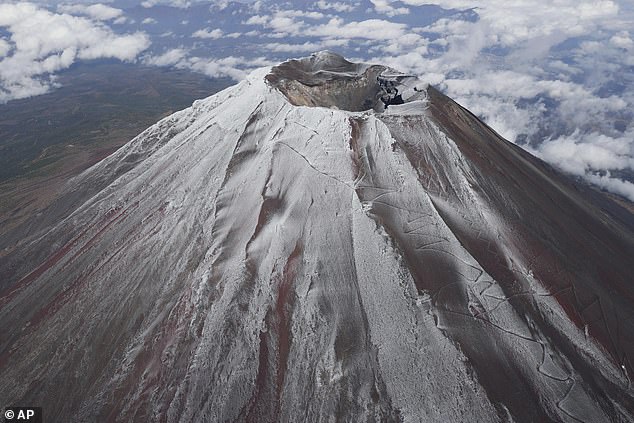
Currently, the volcano remains at rest against the Japanese horizon, serving as an emblem of the country’s allure, resilience, and fortitude. However, experts caution that this serene, snowy peak continues to harbor immense power beneath its surface.
Japan This week, a report was published outlining the restricted measures that could be implemented if Mount Fuji were to erupt tomorrow.
A complete volcanic eruption might produce 17 billion cubic feet of ash, which could travel as far as 75 miles to the east. Within a radius of forty miles, people who couldn’t escape would see their homes crumble from the heavy accumulation of debris.
Those who are farther off may endure by gathering enough supplies for several weeks and then hunkering down. Even with the progress made in surveillance and supply chain management, evacuating Tokyo entirely at one time would be impractical.
In contrast, the metropolis would come to a standstill as its power and water systems become susceptible to disruption from a combination of ash and moisture, potentially causing widespread outages. Debris might also damage electronic equipment and public transportation, leading to paralysis at the city's stock exchange and triggering global repercussions.
In the most extreme scenario, experts estimate that up to 800,000 individuals might find themselves within the reach of scorching pyroclastic flows moving at close to 200 meters per second with temperatures exceeding 1,500°F (800°C).
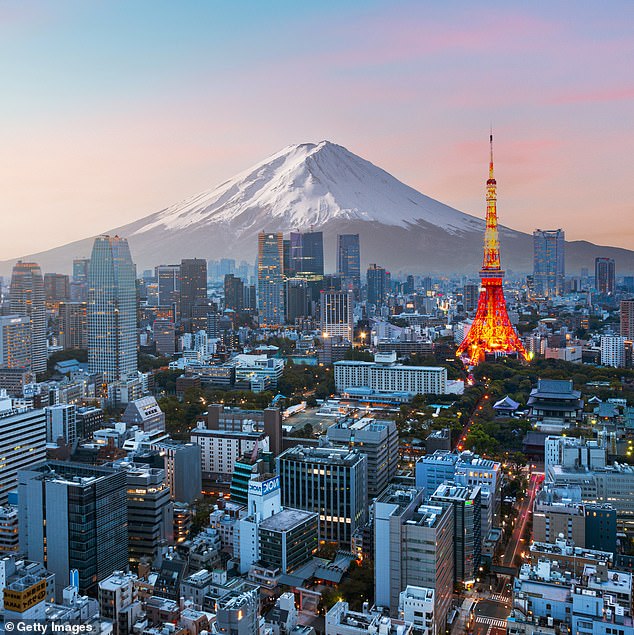
Mount Fuji is an active volcano located approximately 80 miles from the capital city, situated on the island of Honshu.
Amidst the bustling Japanese urban landscape, where contemporary commerce and design flourish, a snowy peak stands firm, grounding the metropolis with its serene and unwavering stance.
However, concealed inside lies a dormant menace. It is thought that Mount Fuji has experienced eruptions before. at least 16 instances since 781 AD. This averages to about one eruption every 77 years.
It has been 317 years since then. Even though meteorologists indicate no signs of immediate action, a government-commissioned committee has once more convened to develop strategies for various outcomes in case of an eruption.
The primary worry lies with the populations residing at the foot of the mountain, right in the potential pathway of pyroclastic flows – fast-moving streams composed of hot gases and fragmented rock material containing minuscule, razor-sharp fragments moving at speeds close to 200 meters per second.
These formations occur during volcanic eruptions, which expel lava, ash, and gases into the atmosphere. As they lose velocity, these materials descend back to Earth under gravitational pull, transforming into scorching flows ranging from 200°C to 700°C (390°F - 1300°F).
Before they cool and decelerate, pyroclastic flows destroy Everything in their way. The intense heat from the debris causes brushfires, while rocky chunks, possibly as large as boulders, race downhill at highway velocities.
The latest research suggests that an eruption might release up to 490 million cubic meters (17 billion cubic feet) of ash into the air, which is ten times more debris than what was caused by the 2011 earthquake and tsunami, with impacts that continue to be felt even now. felt .
Near the edges of the blast, extreme heat could lead to immediate fatalities for both humans and animals. Local farmlands would have their vegetation suffocated by ash, resulting in plant deaths and increasing the likelihood of food shortages.
Lava, which was not present during the 1707 Hoei eruption, would now likely demolish the pathways used for emergency escape routes, impeding exit procedures and obstructing rescue operations.
A 2021 report suggested that a significant eruption might spew out sufficient lava to cut off the primary roads and railway lines surrounding the volcano, thereby isolating Tokyo from western Japan via terrestrial routes.

The previous eruption of Mount Fuji did not have an officially documented death toll. Experts say It is challenging to predict the amount of lava and ash that might be discharged currently, rendering casualty assessments highly uncertain.
A 2021 review It is estimated that up to 12 cities and towns might be affected by lava flows. Pyroclastic flows could potentially reach even farther distances; however, this would hinge upon factors such as wind direction and velocity, along with the magnitude of the eruption.
Significant ash accumulation in the impacted areas could lead to the downfall of nearby communities. According to their most recent alert, the committee warned that ash reaching a depth of 30 centimeters, particularly when mixed with rainfall, would become sufficiently heavy to cause the collapse of wooden buildings over extensive regions.
Dwellings located as distant as Sagamihara, which is home to around 723,000 people and situated about 40 miles from the peak, might collapse due to the pressure.
The committee classified regions most impacted as being at 'Stage Four,' indicating a threat to lives.
Those categorized as 'Stage Three' would experience anywhere from three to 30 centimeters of ash fall, potentially leading to widespread outages, where vital services such as electricity may be interrupted for an extended period and difficult to restore promptly.
Merely three centimeters of ash, possibly covering over 100 miles and impacting much of central Tokyo, has the potential to grind entire cities to a standstill.
The panel cautioned that individuals undergoing dialysis who also require nursing care should be prioritized for evacuation in these areas, as electronic devices here are at risk of being compromised.
Water systems and power facilities could also face contamination risks and might go out of service.
Consequently, people living in Stage 3 zones would need to be rapidly relocated. Individuals in areas categorized as 'Stage 2,' which have repairable infrastructure, would not have to depart.
Takeshi Sagiya, a professor at Nagoya University’s Research Center for Seismology, Volcanology, and Disaster Mitigation, informed This Week in Asia that the ash fallout could lead to numerous issues over extensive areas.
"This type of ash consists of small pieces of molten rock, essentially turning it into a finely ground glass dust," he explained.
'The powder can devastate any electronic devices it comes into contact with. If anyone attempts to clean it up, it may severely scratched surfaces. Additionally, it has the potential to cause buildings to crumble and instantly obstruct roads while halting train operations.'
Airplanes flying near the eruption could lose their engine power if the turbines ingested the ash particles, he explained.
Just ten centimetres of ash on the ground would Be sufficient to prevent cars and motorcycles from using the roads. In 1707, the smog was so dense that inhabitants needed to use candles for visibility even during daylight hours.
However, just a few millimeters of displacement on railway tracks could halt train operations completely, leading to a collapse of public transportation across the greater Tokyo region.
Therefore, regions receiving less than three centimeters of ash fall would remain categorized as 'Stage 1,' potentially facing transportation disruptions.
Interruptions at the Tokyo Stock Exchange along with issues for Japanese banking, finance, and venture capital could lead to significant market fluctuations globally. This disruption would also spread into worldwide commerce and affect stock values.
In 2020, a panel warned If there were a significant eruption, it could shower such an immense amount of ash over Tokyo that both the train system and highway networks would grind to a halt within merely three hours.
Multiple centimeters of ash could block the filters at power plants. This would cause visibility to drop to nothing.
A volcanic event similar in magnitude to Mount Fuji’s previous eruption might persist for about two weeks, according to the panel.
A single official from the Tokyo Metropolitan Government reportedly mentioned that it could take several decades to clean up all the ash resulting from an eruption if it needed to be managed within the local area.
Meanwhile, locals would need to make do with reduced resources.
The panel recognised That during the event, local authorities and businesses would primarily concentrate on restoring vital infrastructure.
Residents have been advised to stockpile sufficient food, water, and additional provisions to last for at least two weeks, as they foresee potential disruptions in the supply chain.


Even though it slumbers at the edge of human settlement, Mount Fuji stays an active volcano endowed with tremendous energy beneath its surface.
Similar to what happened in 1707, an earthquake occurred offshore from this nation, situated along 2,000 Active fault lines – might suffice to unleash that force, transforming the area into a desolate wasteland in just a few hours.
A volcanic outburst as powerful as the Hoei eruption might last up to two weeks, according to researchers. warn This blast would lead to immense devastation across Tokyo and compel the relocation of hundreds of thousands of individuals.
Dwellings would crumble into ashes when struck by thick layers of volcanic ash, while individuals within the paths of pyroclastic surges faced immediate death from scorching fragments.
At present, Mount Fuji stands immobile – a emblem of Japan’s resilience and splendor, luring millions annually with its serene aura.
Read more