How Science Reveals the Ultimate Rock, Paper, Scissors Winning Strategy

- READ MORE: Heads or tails? Scientists claim coin toss probabilities aren’t 50/50.
It's a game employed globally to resolve disputes in conversations.
However, when it comes to 'rock, paper, scissors,' what is the most effective strategy for winning?
You could believe that the playground game relies solely on chance.
However, Nick Metzler A game designer based in New York has clarified why this might not be true.
In a video he shared online TikTok The expert shares techniques using basic psychology that will help you outmaneuver your friends during the game.
'I have a small psychological trick that can help you win at rock, paper, scissors more frequently,' he stated.
When someone says 'rock, paper, scissors, shoot,' they will choose one of those three options.
'However, how do you forecast what they will toss? The response could astonish you.'



Given the options of rock, paper, or scissors, one might assume that each choice has an equal probability of being selected, amounting to approximately a 33 percent chance for each option.
Mr. Metzler clarifies why this is not entirely accurate.
"When individuals speak their thoughts out loud, they tend to be inclined towards wanting to follow either the initial suggestion they hear or the final one," he explained.
'Therefore, when they say "rock, paper, scissors," people are far more inclined to choose either a scissor or a rock gesture.'
Given this information, Mr. Metzler suggests that the wisest initial action would be to choose a rock.
'By doing this, you have the option to either secure a draw or come out as the winner,' he clarified.
Many individuals rarely start with paper. This is actually beneficial since they have discovered from past experiences that initiating with paper usually results in losing, as most folks opt for either rock or scissors instead.
'Since scissors are tossed about half of the time, choosing paper would often result in a loss. Therefore, beginning with paper isn’t a solid strategy.'

If you're engaged in a best-of-three match, subsequent rounds become somewhat trickier since your adversary will consider your past moves when deciding their next action.
'I usually do rock, and then if I win, I will switch,' Mr Metzler added.
If I end up tying, I stay as I am. If I happen to lose and another person plays paper, then let them have the victory—because who even begins with paper? How absurd is that?
Many viewers of Mr Metzler's video have flocked to the comment section to debate his approach and ponder over whether they will implement this tactic in their subsequent matches.
One user quipped, 'I'll soon be sending this to all my rock-paper-scissors opponents as well, starting with PAPER,'
Someone else concurred with this approach, stating: "I doubt I will find an opportunity to utilize this in my future adulthood. However, I am definitely going to opt for paper each time."
And someone simply remarked: "If you aim to gain an advantage, always present the same thing each time."
Mr. Metzler's guidance follows soon after a study uncovered that, contrary to common perception, Coin toss outcomes aren’t always a 50/50 chance.
Researchers at the University of Amsterdam discovered that an inherent bias takes place during coin tosses.
Following more than 350,000 coin flips, the researchers discovered that the initial side lands faceup approximately 50.8 percent of the time.
While this may not seem very important at first glance, researchers assert that it represents overwhelming evidence of a same-side bias.
Next time you flip a coin, you might want to sneak a glance at which side is showing, as this could give you a slight advantage over the seemingly even '50/50' chances.
How to ensure victory in the National Lottery with only 27 purchased tickets
For almost three decades, Brits have been trying to figure out the most effective strategy for winning the National Lottery since its very first draw.
A lot of us choose the same set of 'lucky numbers' every time, whereas some people prefer to let chance decide by picking their numbers randomly each week.
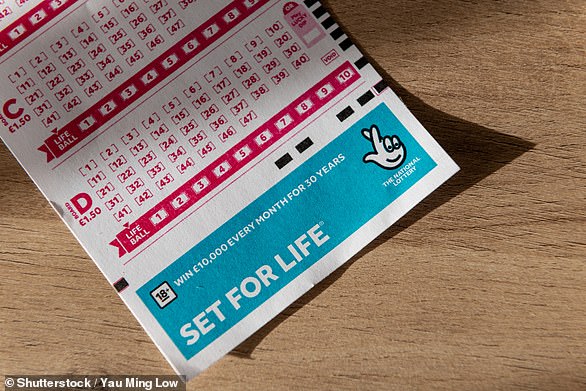
Currently, mathematicians assert they have discovered a method to ensure winning at Lotto, and experiments conducted by MailOnline indicate that this approach appears effective.
Purchasing at least 27 tickets, each featuring a particular set of numbers, holds the key to claiming a prize, as they disclose.
Nevertheless, with each ticket costing £2 – or a substantial £54 for a bundle of 27 tickets – winning might not guarantee you a profit.
Read more here .