EVs on Track to Cut EU CO2 by 20 Million Tonnes This Year, But Transport Still the Biggest Polluter

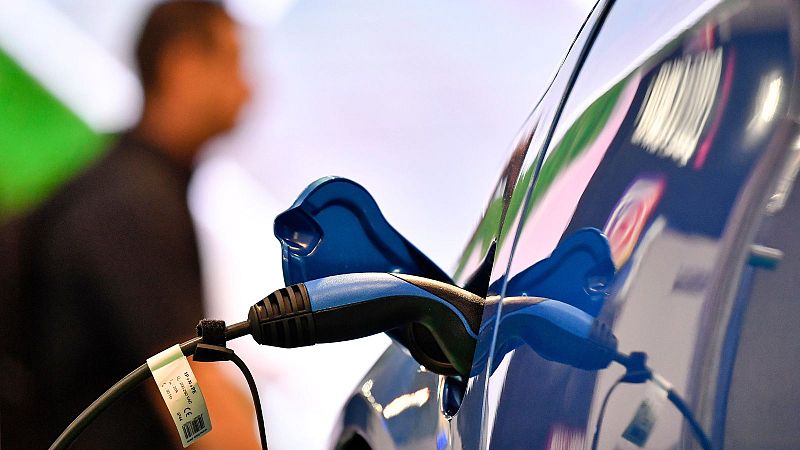
According to an analysis conducted by the campaign organization Transport & Environment (T&E), a rise in the adoption of electric vehicles will result in Europe saving approximately 20 million tonnes of CO2 this year.
This is comparable to the emissions produced by eight coal-fired power plants and signifies one encouraging development in an industry notorious for its challenges in reducing carbon emissions.
Transportation is the sole sector that has not reduced its emissions since 1990; it trails other sectors like industry, power production, and construction, accounting for approximately a third Regarding EU pollution. However, T&E’s most recent report on the state of European transportation reveals report shows that emissions are now decreasing.
"The EU's environmental policies are finally having an impact. With the shift towards electric vehicles, we're witnessing a significant reduction in transportation-related emissions," states William Todds, who serves as the executive director of T&E.
In 2024, Europe's transportation industry emitted 1.05 billion tonnes of CO2, which marks a reduction from the 1.1 billion tonnes recorded in 2019—a decline of 5%. This decrease can primarily be attributed to the significant increase in the adoption of electric vehicles, thereby displacing gasoline and diesel-powered options.
Now is not the time to retract environmental initiatives," asserts Todts. "To ensure the continent’s prosperity and security, it is crucial to intensify our efforts.
Effective environmental policies have led to a surge in electric vehicle adoption.
Automobiles are the largest contributors to transportation-related pollution, emitting a combined total of 450 megatonnes of CO₂ equivalent emissions annually, which accounts for 13 percent of all greenhouse gas emissions within the European Union.
Battery electric vehicles (BEVs) are already three times more environmentally friendly compared to petrol cars, and this advantage will increase as the electricity powering them becomes even greener, according to T&E.
The advocacy organization forecasts that there will be 8.8 million battery electric vehicles on European roadways this year, indicating that one out of every five newly purchased cars in the EU will emit no exhaust fumes.
The report attributes much of this advancement primarily to the European Union's CO₂ regulations for vehicles. These guidelines offer clarity for automakers as they approach the 2025 objective. Car manufacturers have consequently invested in shifting their manufacturing processes toward electric vehicles, coinciding with decreasing battery costs. This convergence suggests that by 2025, consumers can expect a wider range of more cost-effective and mainstream electric vehicle options.
Is the EU equipped with sufficient charging stations for all its electric vehicles?
Many people still view insufficient charging stations as a barrier to purchasing an electric vehicle; however, T&E analysis indicates that the infrastructure has kept up with the increase in battery electric vehicles.
Under the EU Alternative Fuels Infrastructure Regulation (AFIR), each country has annual targets based on a ratio of total charging power output and the number of electric cars on the road. The bloc’s 2025 target was exceeded back in 2022, and there are now more than 1,100 charge points .
Across major roadways, 11 nations have achieved the EU objective of installing charging stations at intervals not exceeding 60 kilometers. The AFIR is further encouraging the deployment of electric vehicle charging facilities within urban areas, with cities like Oslo, Amsterdam, Copenhagen, Brussels, and Ljubljana standing out as frontrunners in this initiative.
Vehicle manufacturing emissions 'the next frontier' according to T&E
Electric vehicles aren't the ultimate solution for Europe's widespread issue. transport problem , however.
Firstly, their manufacturing process remains quite environmentally unfriendly. Given that approximately 10 million new cars are sold annually, the production of these electric vehicles (not including batteries) contributes roughly 50 megatons of CO2 emissions.
According to T&E, batteries, aluminum, and steel are the key areas for emissions reduction. The organization is advocating for increased utilization of eco-friendly and recycled steel.
Aircraft emissions are hindering attempts to make transportation more environmentally friendly.
Even with advancements on European roadways, the researchers caution that rising air pollution is offsetting attempts to reduce transportation-related emissions.
Europe’s airlines emitted 143 million tons of CO₂ last year, an increase of almost 10 percent from 2023.
The emissions from Europe's maritime activities continue to be notably high at 195 million tonnes of carbon dioxide equivalent (Mt CO2e), according to the report, since these sectors heavily depend on fossil fuels.
However, with shipping now incorporated into the EU’s carbon trading system ( ETS Combined, both sectors are expected to generate €5 billion in revenue in 2024, as estimated by T&E.
These resources can help close the cost difference between eco-friendly e-fuels and conventional fossil fuels, which is crucial for advancing climate efforts and enhancing energy safety.
"Europe is gradually freeing itself from its reliance on oil, yet we continue to spend enormous sums on imports from foreign nations," states Todts.
Imports of fossil fuels continue to be the primary energy supply for transportation, accounting for 96 percent of Europe's crude oil and 90 percent of its natural gas originating from foreign sources in 2023. These supplies frequently come from authoritarian governments and at significant cost.