Lukashenko Sworn In for Sixth Term, Tells Critics: "You Have No Future"

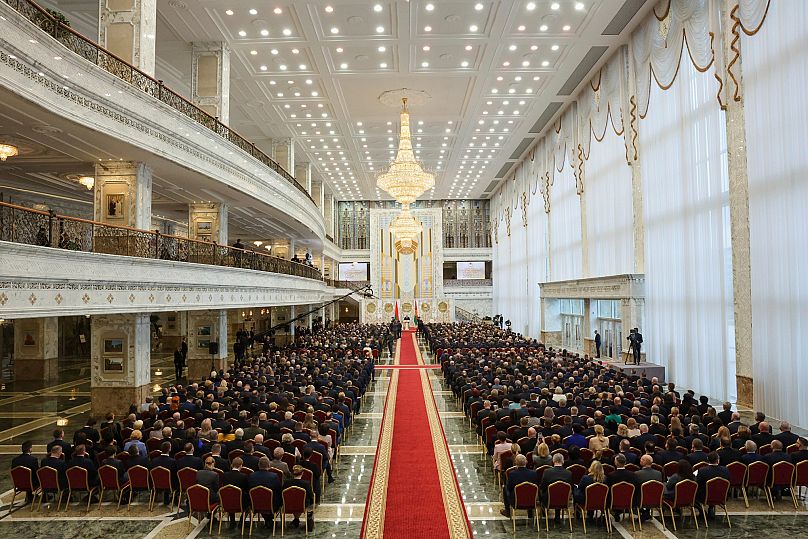
Alexander Lukashenko was inaugurated for his seventh continuous presidential term in Belarus during a ceremony held in the nation's capital city, Minsk.
At the event, Lukashenko mocked those who label him 'Europe's last dictator' by asserting that Belarus boasts greater democratic values than those who position themselves as paragons of democracy.
"Lukashenko stated during his inaugural address at the Palace of Independence that half of the globe envisions our 'authoritarian regime' as one driven by genuine enterprise and the welfare of our citizens," he remarked.
Last year, Lukashenko reached thirty years in leadership, and his political rivals criticized the carefully staged presidential election held on January 26th, calling it a sham.
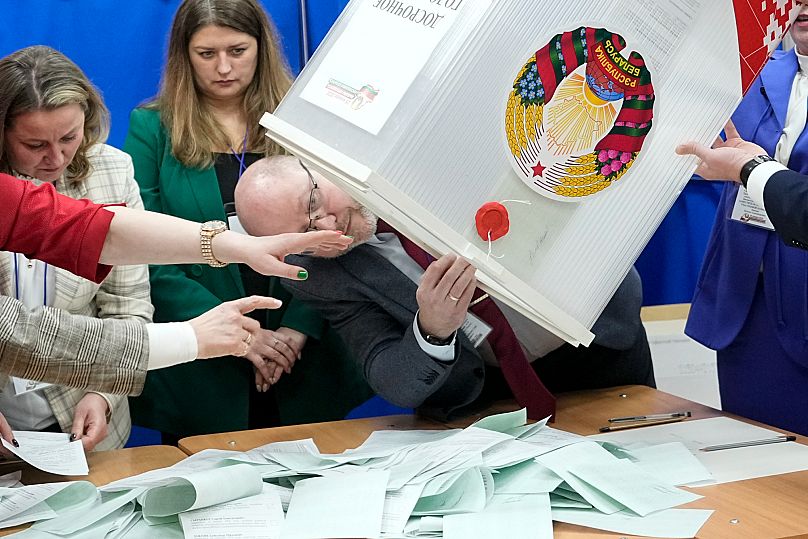
The Belarusian Central Election Commission stated that Lukashenko secured nearly 87% of the votes following an election where four nominal opponents on the ballot all expressed support for his leadership during their campaigns.
Members of the opposition have faced imprisonment or exile overseas due to Lukashenko's efforts to suppress dissent and limit freedom of expression.
Following the 2020 election, the nation with a population of nine million experienced unparalleled mass demonstrations lasting for months, which led to severe government repression.
More than 65,000 individuals were detained, numerous others faced beatings at the hands of law enforcement, and both independent media organizations and NGOs were shut down and banned, leading to criticism and punitive measures from Western nations.
On Tuesday, thousands of Lukashenko’s followers participated in the inaugural event. During his speech, he criticized his detractors, labeling them as puppets of foreign powers who stood against public sentiment.
“You lack and will continue to lack public backing; your prospects are dim,” he asserted. “Our level of democracy surpasses that of those who claim to be its paragons.”
Activists from Belarus claim that over 1,200 individuals are being held as political prisoners in the nation. This group includes Ales Bialiatski, who founded the Viasna Human Rights Centre and is also a Nobel Peace Prize recipient.
According to a joint statement from Viasna and 11 other Belarusian human rights organizations, "The elections took place during an intense period of human rights violations, with widespread fear instilled through repression targeting civil society, independent media outlets, political opponents, and voices of dissent."
It is claimed that Lukashenko's grip on power lacks legitimacy.
Since 1994, Lukashenko has been at the helm of Belarus, leaning heavily on financial aid and political backing from Russian President Vladimir Putin, who has also served for a significant period spanning two decades. This partnership aided Lukashenko in navigating through the 2020 protest challenges.
In February 2022, Lukashenko permitted Russia to utilize Belarusian soil for their invasion of Ukraine and subsequently accommodated some of Russia’s tactical nuclear weaponry within the country.
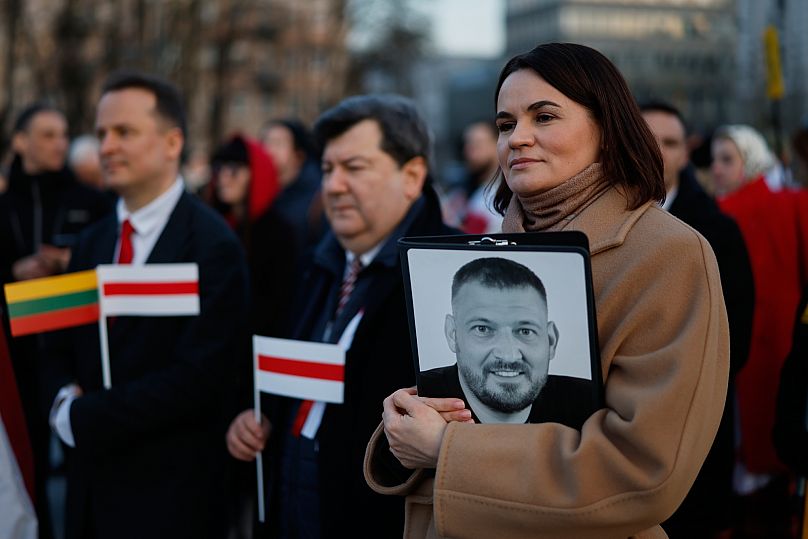
Sviatlana Tsikhanouskaya, the exiled opposition leader from Belarus, who escaped the country due to governmental pressure after challenging Lukashenko in the 2020 election, pledged to continue her struggle for the nation’s liberty.
"Our objective is to free ourselves from Russian occupation and escape Lukashenko's oppression, and to reintegrate Belarus back into the European community of countries," Tsikhanouskaya stated during her address to the Lithuanian parliament.
Certain analysts suggest that Lukashenko might attempt to improve relations with the Western world.
Karbalevich, an independent political analyst, noted that Lukashenko had already begun signaling to the West his willingness to engage in dialogue and improve relations with the aim of reducing his heavy reliance on Moscow and easing Western sanctions throughout his seventh presidential term.