Entrepreneurial Dreams Remain Out of Reach for Many Filipinos

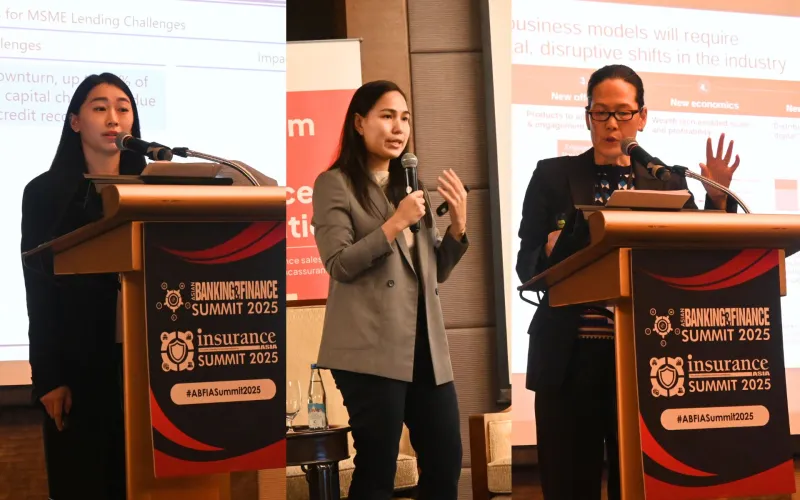
Entrepreneurs grapple with burdensome loan conditions and substantial collateral demands.
According to analysts, six out of every ten Filipinos view achieving financial stability and launching a business as top priorities; however, this may pose difficulties due to limited funding options for new entrepreneurs.
A lot of these individuals aim for financial stability not with the intention to purchase a home or go traveling, but rather to guarantee they have enough resources to cover potential healthcare costs should either themselves or their family members fall sick. Sitti Reyes , who leads at Boston Consulting Group, Inc., stated to the Asian Banking and Finance along with Insurance Asia Summit 2025 in Manila in February.
"She mentioned that the leading aspiration of Filipinos was surprisingly financial stability for medical expenses," referencing a Boston Consulting report published in November.
Reyes stated that financial products ought to align with Filipino ambitions, including healthcare security and fostering entrepreneurship, aiming to close the funding gap.
Small, medium, and micro enterprises (SMMEs), which form the cornerstone of the Philippines' economic structure, frequently encounter challenges when trying to obtain loans. This issue leads to a funding shortfall amounting to $10.5 billion (approximately ₱600 billion). Fei Yong , who serves as a manager at YCP Holdings, addressed the summit.
MSMEs, which make up over 99% of all Filipino enterprises, generate 36% of the country’s economic output and provide jobs for 67% of the workforce. However, they receive less than 5% of bank loans, falling short of the legally mandated 10% minimum requirement.
Many of these enterprises frequently face challenges due to inadequate credit records, complex paperwork demands, and stringent collateral needs.
Yong stated that universal and commercial banks control more than 90% of the loan market within the banking sector. However, he noted that just 4% of these loans are allocated to MSMEs.
In the meantime, rural and cooperative banks operating in the countryside do not have sufficient funds to loan to MSMEs.
Yong mentioned that MSMEs in emerging markets such as the Philippines function at just 29% of the productivity level of larger businesses. He pointed out that should these smaller enterprises expand, their efficiency might jump to 84%, leading to a substantial 77% growth in GDP per capita over the coming twenty years.
Yong suggested that credit guarantees, digital lending platforms, and alternative credit scoring methods might also be beneficial.
The Philippines' Credit Guarantee Facility offered by the Philippine Guarantee Corporation has demonstrated initial success, having secured over $130 million (or ₱7.46 billion) in loans for more than 43,000 micro, small, and medium-sized enterprises (MSMEs) as of June of last year.
Patricia Buenaventura Nichol A partner and office head at Bain & Co. stated that the primary competition will emerge among Generation Z and Millennials. By 2030, these digitally native groups are projected to make up 55% of the market, compared to their current share of 30%.
Even with their increasing economic power, these younger consumers still lack adequate services, offering a chance for financial organizations ready to address their requirements.
Nichol stated that banks ought to progress past merely offering financial products, typically without evaluating customers' requirements and objectives. "There will be a transition from a focus on products towards an approach centered more around providing guidance."