Entry Guide for U.S.-Bound Green-Card and Visa Holders: Essential Insights

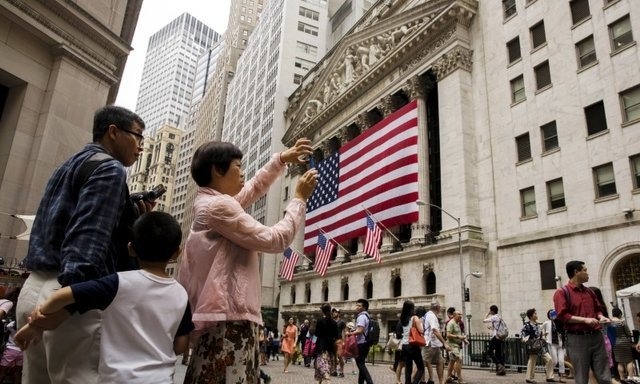
Given that visa holders and individuals with green cards face stricter scrutiny at U.S. airports, it is recommended for travelers to familiarize themselves with their rights and entitlements prior to making their final travel arrangements.
As the Trump administration intensifies oversight to curb unlawful entries, certain educational organizations like Brown University have lately cautioned their international staff and pupils to postpone all overseas travel arrangements , as a precautionary measure.
Countries like Canada, Denmark, Ireland, and Germany have also adjusted their travel guidance regarding the U.S., cautioning their citizens that not adhering rigorously to U.S. entry requirements might result in detainment.
Stories about the holding of green-card and visa holders in recent days have raised worries amongst travelers. Here are some recommendations provided by experts, as reported across various news outlets.
1. U Comprehend your rights based on your immigration status.
Broadly speaking, there are typically three primary groups of travelers who enter the United States, according to Stephanie Gee, senior director for U.S. legal services at the International Refugee Assistance Project, as noted by her statements. NPR .
Although U.S. citizens have assured admission privileges, green-card holders are entitled to certain legal protections, indicating that solely an immigration judge can revoke their green card status.
As a result, both U.S. citizens and green-card holders have the option to choose not to respond to questions from customs officers or allow inspections of their electronic devices, though this choice could potentially cause delays in entering the country.
According to Gee, travelers with temporary visas, typically held by students and tourists, have the "least rights."
Customs officials have the final say when it comes to allowing people into the country, and they may deny entry to visa holders who choose not to answer their inquiries.
Hence, visa holders must confirm that their documents have not lapsed and that they do not currently have a renewal request outstanding.
|
|
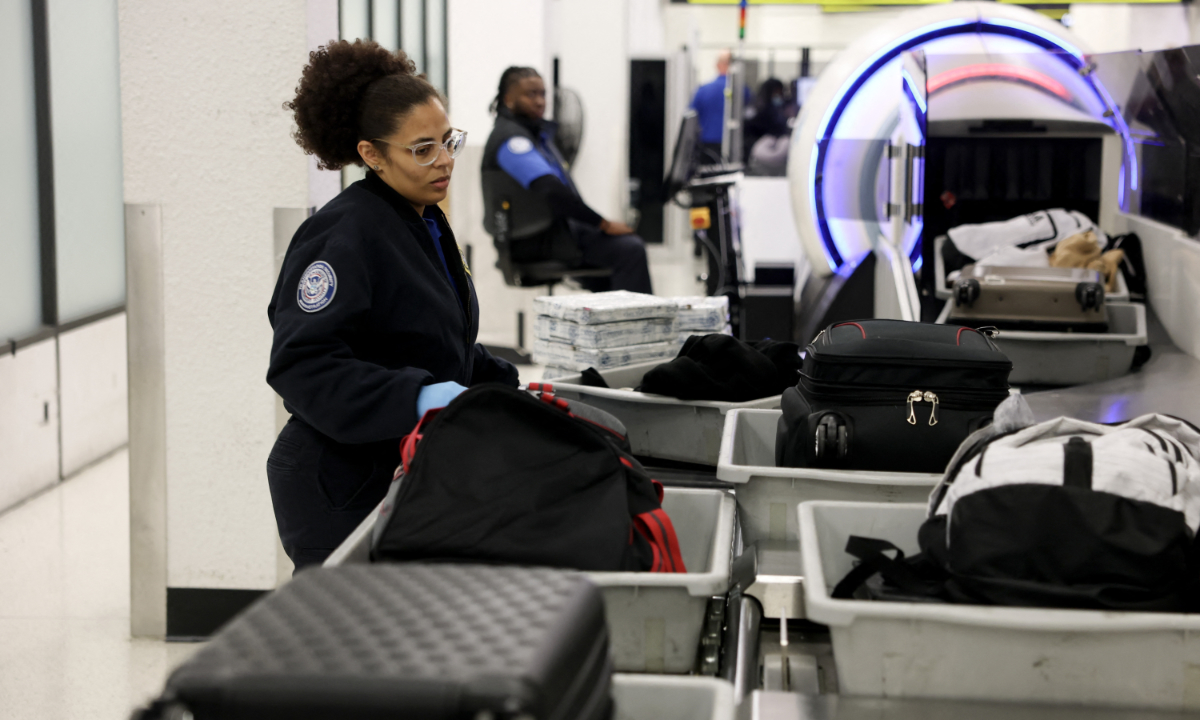
On December 17, 2024, Transportation Security Administration officers assisted travelers at a security screening point within the Miami International Airport located in Miami, Florida. The photograph was taken by AFP. |
2. Assess your individual risk level, preferably with input from legal advisors.
Various extra components might elevate a traveler's risk status.
Stephen Yale-Loehr, a former professor of immigration law at Cornell Law School, advised people from the 11 nations listed under the potential "red" classification — where traveling to the U.S. would be completely banned — to thoughtfully reassess their travel arrangements.
The listed countries encompass Afghanistan, Bhutan, Cuba, Iran, Libya, North Korea, Somalia, Sudan, Syria, Venezuela, and Yemen.
Yale-Loehr similarly cited an initial roster of 43 countries possibly subject to a revised travel ban, according to reports by Yale-Loehr. The New York Times earlier that month.
Individuals who have been refused admission despite holding valid visas are typically put on the first available flight returning them to their home country. Nonetheless, there have been instances where people were held for considerably longer durations, extending over several days or even weeks.
"It appears to be an increasingly significant issue," he stated. NPR .
For individuals with green cards, activities like taking prolonged trips abroad could raise eyebrows when they return. Additionally, recent advice from several immigration lawyers suggests that green-card holders who have any kind of criminal history, no matter how minor, should avoid traveling outside the United States.
Earlier that same month, Fabian Schmidt, a 34-year-old electrical engineer with permanent residency status who hails from Germany, found himself moved into immigration custody at Boston’s Logan International Airport because of an old misdemeanor conviction related to marijuana possession from more than ten years ago.
Gee stated that the suggested approach is for green-card and visa holders to consult with an immigration lawyer to obtain tailored advice based on their specific situations.
Although this might be an activity you wouldn’t have typically thought of and your previous travels were routine," she cautioned, "it’s evident that immigration checks at airports are becoming more frequent than they used to be.
3. Keep in mind that customs officials have the power to inspect electronic devices.
At border crossings, U.S. Customs officials can halt people and assess whether they may enter the country. They have permission to inspect passengers' belongings for restricted goods, irrespective of having particular cause for suspicion. The Guardian.
Nevertheless, customs officers are not allowed to perform searches or inspections merely due to an individual's religion, race, national origin, gender, ethnicity, or political views.
The government argues that they have the authority to search travelers' electronic devices such as phones and laptops without requiring a particular cause. Instances have occurred where customs officers have requested passwords from people arriving at or departing from the United States with their smartphones or computers.
Although U.S. citizens cannot be denied entry for refusing to provide passwords or unlock their devices, such actions can result in delays, more thorough questioning, and potentially having their devices seized for further examination by customs officials.
This rule should similarly pertain to U.S. lawful permanent residents who were previously allowed entry and continue to uphold their immigration standing; their green cards can't be invalidated without a hearing presided over by an immigration judge.
4. Prepare for p otential i ssues at e ntry
The American Civil Liberties Union clarifies that travelers directed to undergo secondary inspection at the airport do not have a guaranteed right to legal representation during that process.
Yale-Loehr noted that keeping an immigration lawyer’s contact information easily accessible continues to be advantageous. Additionally, he recommends that travelers set up arrangements with a dependable friend who can be reached quickly in case of issues upon entering the United States.
Gee also mentioned that travelers requiring language assistance during inspections can ask for an interpreter.
"The narratives are certainly troubling," Noor Zafar, a senior staff attorney handling immigrant cases, told the Washington Post .
I believe we're currently experiencing an era of more stringent policies being enforced at the borders. This necessitates individuals taking additional preventive actions.