Jury Rules: New York Times Did Not Libel Former Alaska Governor Sarah Palin

On Tuesday, a U.S. jury determined that The New York Times did not defame ex-Alaska Governor Sarah Palin with an erroneous statement from a 2017 op-ed they claim tarnished her image.
After slightly more than two hours of discussion, the jury reached a decision following the concluding statements from attorneys representing both Palin and the newspaper during the ongoing second week of a civil trial at a Manhattan federal courthouse.
Palin stated on Monday that she experienced a rise in death threats and felt disheartened following an opinion piece discussing gun violence. The article suggested that her political action group had played a role in fostering a climate of aggression through its contributions to political discourse.
Are you curious about the most significant issues and global trends? Find out here with SCMP Knowledge Our latest platform offers carefully selected content including explainers, FAQs, analyses, and infographics, all provided by our prestigious team.
The Times amended the article fewer than 14 hours after its publication.
Kenneth Turkel, who represents Palin, appealed to the jurors to rule that the Times should be held responsible for defamation because their ex-editor of the opinion section, James Bennet, either had knowledge about the inaccuracies in his publication or displayed “a reckless disregard” for the veracity of the information.
He informed the jury that they ought to grant Palin compensation for reputational damage and personal emotional distress, further emphasizing that they should "determine an amount so she can find resolution with this matter."
“To this day, there has been no accountability,” he stated. “This is precisely why we have gathered.”
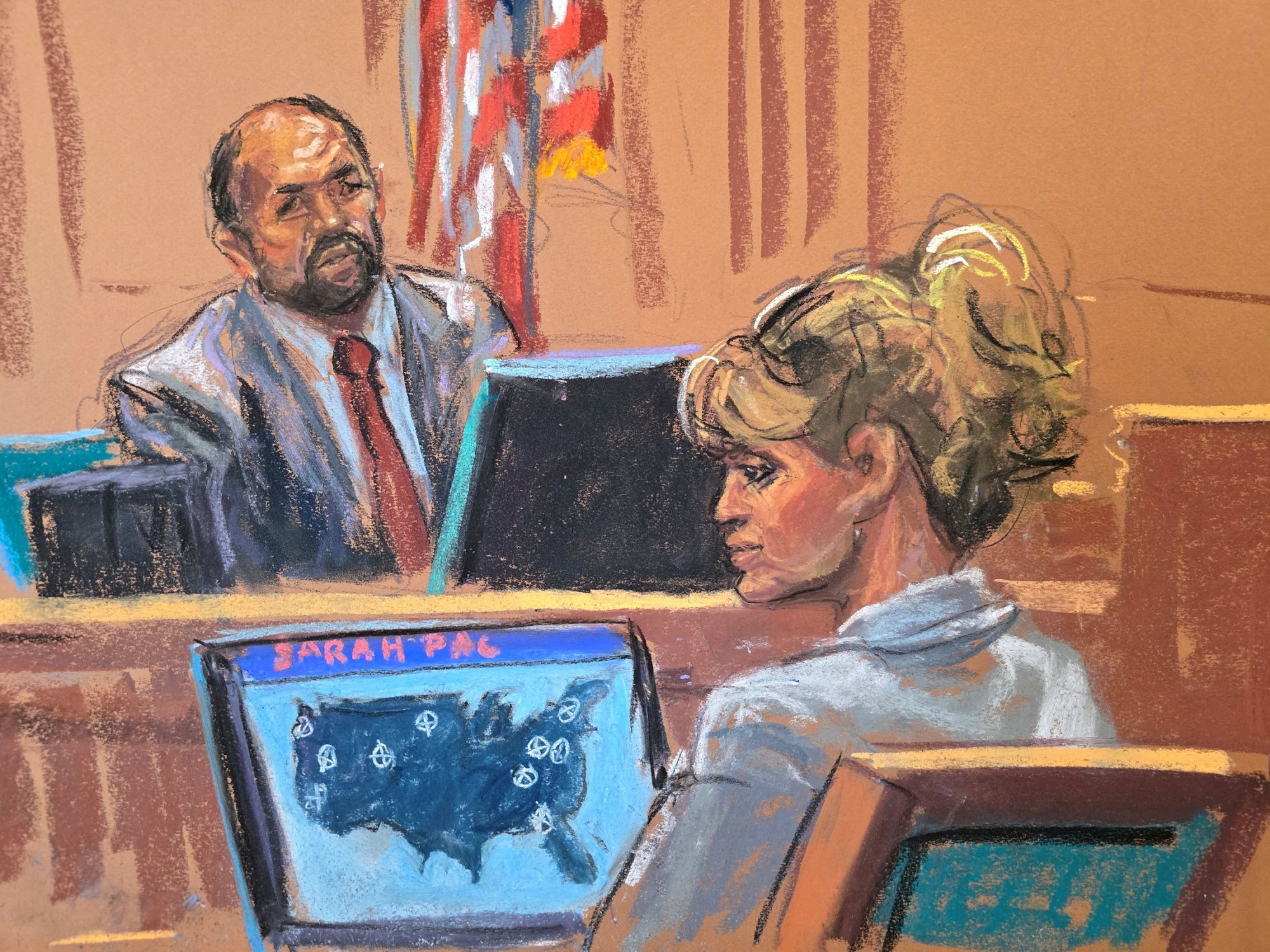
He cautioned the jury members not to let themselves be misled by Palin's "cheerful" demeanor while testifying.
Turkel mentioned, "She isn’t one for shedding many tears." He added, "To them, it might've just seemed like a genuine error. But for her, it turned out to be a pivotal moment in her life."
Palin, who obtained a journalism degree during her college years, filed a lawsuit against The New York Times seeking undisclosed compensation in 2017. This was roughly ten years following her emergence into the national spotlight as the Republican candidate for U.S. Vice President.
Her legal action originated from an opinion piece discussing gun control, which was released following the 2017 incident where US Representative Steve Scalise, a Republican from Louisiana, was injured during a Congressional baseball practice outside Washington D.C., after a man known for his hostility towards the Republican party attacked them.
The editorial in The New York Times stated that prior to the 2011 massacre in Arizona, where ex-US Congressmember Gabrielle Giffords was gravely injured and six people lost their lives, Sarah Palin’s political action group had fostered a climate of aggression. They did this by publishing a chart highlighting electoral zones targeted with digital rifle sights; among these were Giffords' district along with those of nineteen additional Democratic members.
As a correction, The Times noted that the editorial had "erroneously claimed a connection between political rhetoric and the 2011 shooting" and had also "mischaracterized" the map.
When testifying in the witness box last week, an emotional Bennet apologized to Palin, expressing his torment over the mistake and his swift efforts to rectify it following reader complaints to the newspaper.
Felicia Ellsworth, an attorney representing the Times, stated that the jury cannot hold the newspaper or Bennet responsible since they would first need to determine that the mistake was deliberately printed by editors aware of its incorrectness.
She stated that there hasn’t been even a tiny bit of proof indicating anything beyond an innocent error.
Ellsworth mentioned that Bennet and the Times "promptly, distinctly, and swiftly corrected the record" after discovering the mistake.
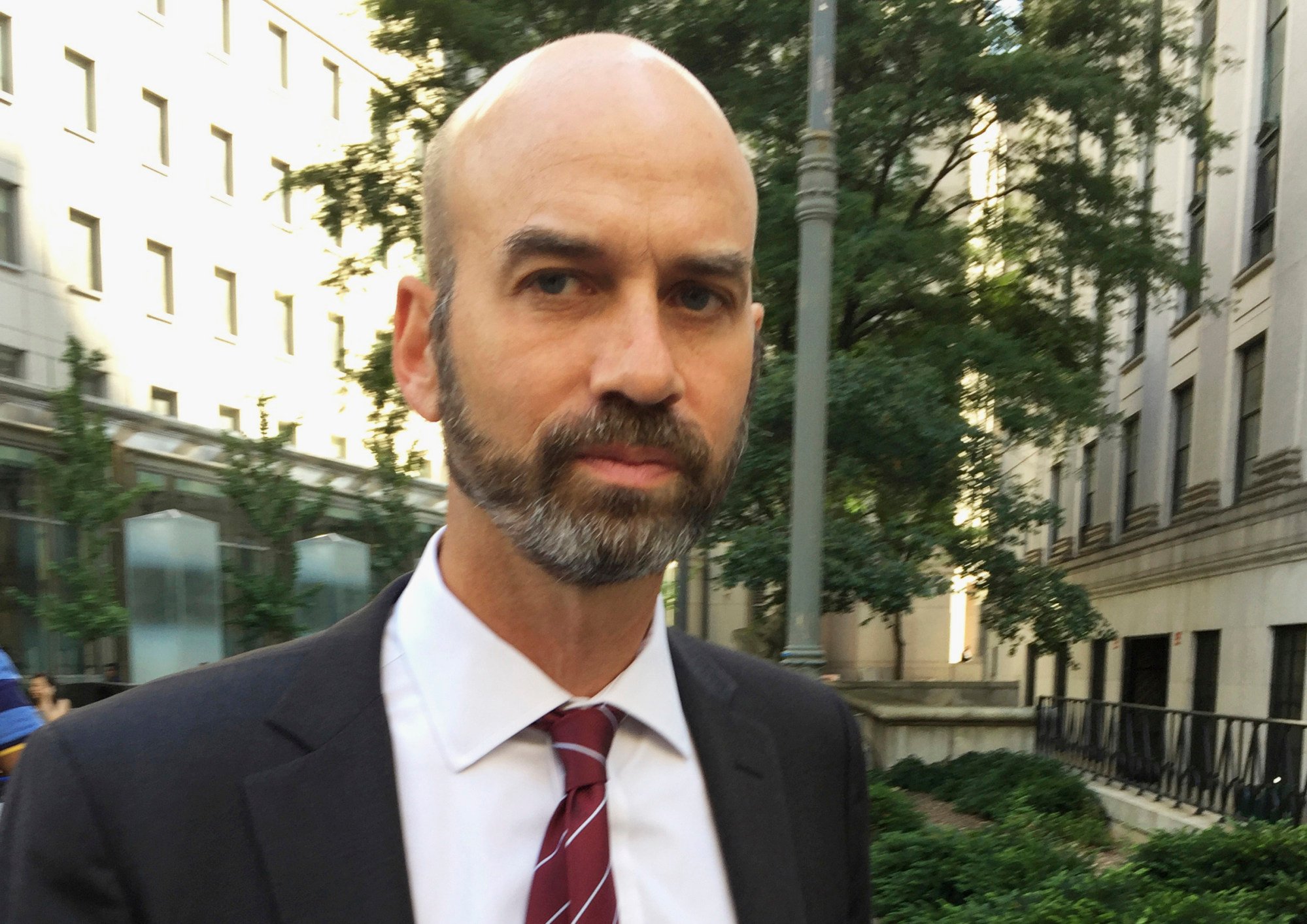
The attorney highlighted that multiple Times editors gave consistent testimony regarding their efforts to rectify the mistake and the emphasis they put on precision, whereas Palin’s assertions lacked support beyond her own word.
She pointed out that since Palin is a public figure, the jury must establish "actual malice" for her case to succeed.
"For Governor Palin, this represents yet another chance to confront false reporting. For James Bennet, accuracy is crucial," Ellsworth stated.
In February 2022, Judge Jed S. Rakoff dismissed Palin's assertions with a ruling made during the time when the jury was deliberating. Subsequently, he allowed the jurors to reach their decision, which likewise ruled against Palin.
The trial is taking place following the restoration of the case by the 2nd US Circuit Court of Appeals in Manhattan during the previous year.
The appeals court stated that Judge Rakoff’s decision to dismiss the case unjustly interfered with the jury’s responsibilities. Additionally, they pointed out issues during the trial, including the incorrect omission of evidence, improper instructions given to the jury, and an inappropriate answer provided to a juror’s query.
More Articles from SCMP
IMF reduces GDP growth forecasts for China, the U.S., and global economy due to escalating trade tensions.
China urges Indonesia to unite against protectionism amid escalating U.S. trade war.
UN specialists will evaluate Hong Kong’s rescue team for certification in the coming year.
Could US tariffs aimed at undermining Hong Kong’s 'very existence' actually strangle its economy?
The article initially appeared on the South ChinaMorning Post (www.scmp.com), which stands as the premier source for news coverage of China andAsia.
Copyright © 2025. South China Morning Post Publishers Ltd. All rights reserved.