The 5 Travel Blunders That Can Ruin Your Vacation

- A technology specialist has cautioned against utilizing unknown websites to arrange flight bookings.
- They similarly advised tourists to verify their smartphone plans prior to placing calls.
- EXPLORE FURTHER: Keep up-to-date with technology insights from expert Kim Komando’s complimentary newsletter; more than 500K subscribers join in. Sign up here
Rapid travel checklist: Include an additional mobile charger, save your boarding pass on your device, and carry extra snacks beyond what you anticipate needing.
I wish technical advice could be so straightforward. However, the consequences are much more severe as well.
From making reservations to embarking on your trip, these are five errors that can ruin your vacation along with wise tips for a seamless journey.

1. Purchasing tickets from an obscure website with an incredible offer
When looking for airline tickets online or responding to an email, the multitude of websites and applications can be overwhelming. You opt for the most affordable choice available.
The website guarantees an excellent rate, prompting you to purchase the ticket. You reserve what seems like a confirmed seat and receive an email confirming everything is arranged.
You go to the airline's primary website, input your details, and voila — you have your assigned seat.
The allocated space expires after two weeks, and consequently, your spot disappears. Upon discovering this, you seek assistance from the airline. However, typically, they cannot offer much support because merely a reservation had been made.
Thieves excel at developing counterfeit applications and websites designed to deceive you. Thankfully, there are indicators to be aware of that can assist in steering clear of such scams.
● Verify through official sources: The Better Business Bureau can serve as an excellent resource for assessing whether a company is legitimate. This organization maintains records of genuine businesses; if your potential partner isn’t listed, it’s wise to proceed cautiously.
● Check online reviews and ratings: Look at feedback on platforms such as TripAdvisor, Yelp, or Google. Be wary of overly positive or negative comments that might not be genuine. Instead, focus on finding a balanced mix of opinions with recurring patterns.
● Accreditation and Licensing: Numerous reputable travel agencies hold memberships with well-known industry groups such as the American Society of Travel Advisors (ASTA) or possess IATA (International Air Transport Association) certification. Look for these qualifications on their website.
● Clear pricing structure: Reputable websites provide transparent information regarding all expenses involved. Be cautious of platforms that conceal additional charges or fail to explicitly outline their cost structures.
● Safe payment methods: Trustworthy travel websites provide secure and widely recognized payment choices. Exercise caution with platforms that accept payments solely via bank transfer or money order.
2. Using a public charger at an airport
When your battery is running low and you have nowhere to charge, a public charging station seems like a blessing from above. However, these stations turn out to be surprisingly vulnerable to tampering.
Using merely a USB cable, a cybercriminal has the ability to install malicious software or extract information from each device that gets connected for charging purposes.
If you urgently need power for your device, you can do so safely via USB… as long as you have the correct cable. Bring along a charging-only cable on your travels. These cables are inexpensive, small, and they prevent any data from being transferred.
If your phone is relatively new or more recent, it might prompt you with an option to either 'trust this device' or 'share data' once connected. It’s best to decline these requests while traveling!
These choices enable data exchange between your device and the charging equipment, potentially introducing malware infection risks.
Select the 'charging mode' instead. If this isn't an option, continue walking.
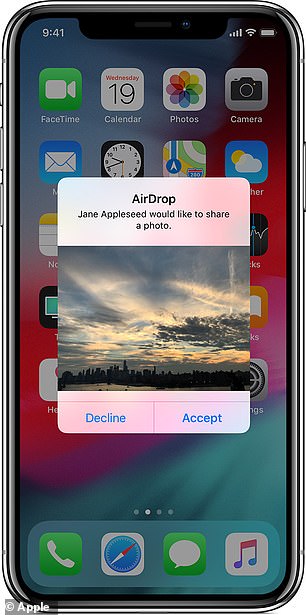
3. Keeping AirDrop accessible to everyone
Keyloggers record everything you type, and cybercriminals often use Apple's AirDrop function to distribute these malicious tools.
Do not receive items from unknown individuals during the journey.
On your iPhone:
● Navigate to Settings > General > AirDrop.
You have the option to configure your device so that it declines all AirDrop requests, accepts them solely from people listed as contacts, or allows them from anyone. (Choosing the latter might not be wise when traveling.)
On a Mac:
● Click on the Control Center in the menu bar (represented by an icon with two sliders).
● Tap on AirDrop. Here, you have the option to enable or disable it and select whom you allow to send content.
4. Giving your mobile device to an unfamiliar person to take a photograph
My buddy Mary was visiting Rome with her 14-year-old daughter.
They halted to snap some selfies when a friendly-looking stranger—a man around 30—offered to photograph them.
Mary entered her PIN code, passed the phone over, and the so-called Good Samaritan seized it and fled.

Your mobile device holds far greater value than what can be obtained from selling it. (Although the potential sale price is quite tempting, especially if you own a recent model.)
Consider all the linked accounts: banking services, additional financial applications, email inboxes, and confidential texts that may contain sensitive information.
Here are several straightforward methods to safeguard yourself:
● When in public spaces, protect your PIN. If you have to unlock your device around others, opt for Face ID or your thumbprint instead.
● Avoid using a simple PIN; definitely avoid four-digit ones! Create one that’s lengthy enough for you to recall easily.
● If you prefer not using Face ID, opt for a passcode that includes both numbers and letters if this option is available on your device.
5. Overlooking the verification of data roaming charges/services
Ouch, that sore feeling in your wallet. Before setting off on land, sea, or air, make sure to visit your mobile carrier’s webpage or give them a ring to clarify what services you can expect during your travels. Service might be restricted to particular nations, timeframes, or data caps.
Be aware of this beforehand; you won’t want to face the unexpected charges later. Based on your findings, opting for a travel SIM or an eSIM might prove more advantageous.
Read more