Trump Offers 'Package Deal' to South Korea in Trade Talk With Acting President Han

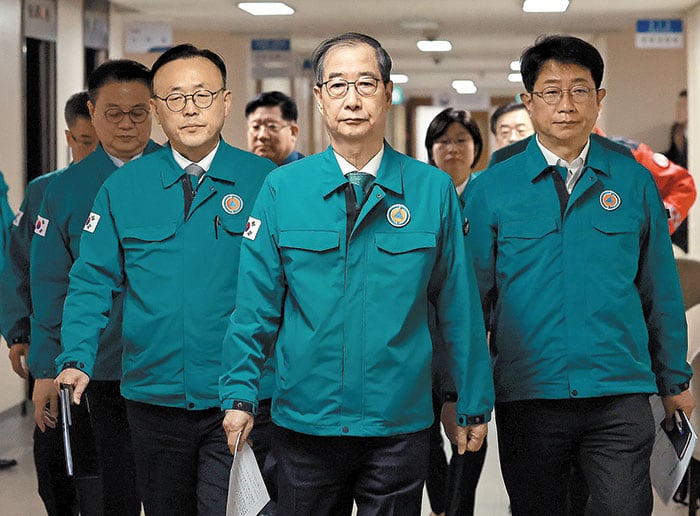
On April 8, Acting President Han Duck-soo received an unexpected late-night telephone call from U.S. President Donald Trump, apparently initiated by the United States' request. According to reports, during their discussion, Trump proposed the idea of a "comprehensive agreement" covering various topics such as tariffs, shared costs for defense, and other matters related to trade.
In reaction, the South Korean administration led by Han is formulating a cohesive approach. Analysts suggest that the trade policies developed over the next two months leading up to the premature presidential elections might significantly influence S. Korea-U.S. ties for the duration of Trump’s upcoming four-year presidency.
Han has focused closely on an instruction Trump gave right after their conversation, directing the White House to place top priority on countries like South Korea and Japan during forthcoming trade talks. Given how tariffs are unsettling stock markets within the U.S. and signs of rising prices are emerging, his administration aims for swift, tangible successes.
Experts think that this sense of urgency has led Washington to initiate preliminary talks with nations that are more receptive to U.S. tariffs, like South Korea. With time running out, Seoul now perceives a larger window for making its concerns known. It’s anticipated that the government will bolster its bargaining stance through key sectors such as shipbuilding, while also demonstrating some willingness to be flexible regarding defense expenditure sharing, aiming to secure reductions in import duties as part of these discussions.
“A key focus for us right now is adjusting tariffs,” stated an official from the prime minister’s office. “We view tariffs as intricately linked with larger economic concerns such as shipbuilding, liquefied natural gas (LNG), and maintaining a favorable trade balance. It’s essential that we address all these aspects collectively.”
As stated by government representatives, Han addressed all three topics—shipbuilding, liquefied natural gas (LNG), and trade balance—when he spoke with Trump. These sectors pose difficulties for the United States, and it’s thought that South Korea has an advantage in each one.
In particular, shipbuilding is considered a crucial issue closely tied to U.S. national security. The U.S. Navy relies on maintenance, repair, and overhaul (MRO) to keep its fleet operational; however, due to the declining state of the domestic shipbuilding sector, the nation presently does not have the capability to handle MRO autonomously.
Essentially, Trump thinks shipbuilding needs to return to the United States," stated a government official. "However, establishing the required industrial facilities might require several decades. Until then, the U.S. will probably rely on South Korean shipyards or carry out maintenance, repair, and overhaul activities in Korea.
Trump’s mention of LNG is widely interpreted as a reference to development plans in Alaska. In line with that, Seoul is reportedly reviewing options to increase imports of U.S.-produced LNG as part of a broader trade package.
"South Korea stands as the sole medium-sized nation with the capability to produce supersonic fighter aircraft. It also maintains a strong position in key sectors such as semiconductor technology and possesses sufficient financial resources to acquire U.S.-made products and services," observed the high-ranking official.
Instead of reacting to Washington’s trade policies with opposition, we should initiate discussions leveraging our competitive advantages. The administration views South Korea’s collaborative position as a stark contrast to other U.S. allies who have adopted a more adversarial stance.
Officials provided insight into the arrangement of the Han-Trump telephone conversation. On March 24, when Han reclaimed his position, Seoul initially suggested the call, but the United States did not reply immediately. It was ultimately scheduled following a request from Washington on April 8.
Authorities think that after the Constitutional Court made its definitive decision on ex-President Yoon Suk-yeol's impeachment, the U.S. started acknowledging Han as South Korea’s effective head. It is also suggested that during the Trump administration, they aimed to convey their plan for initiating bilateral talks with key trading allies before introducing retaliatory tariffs.